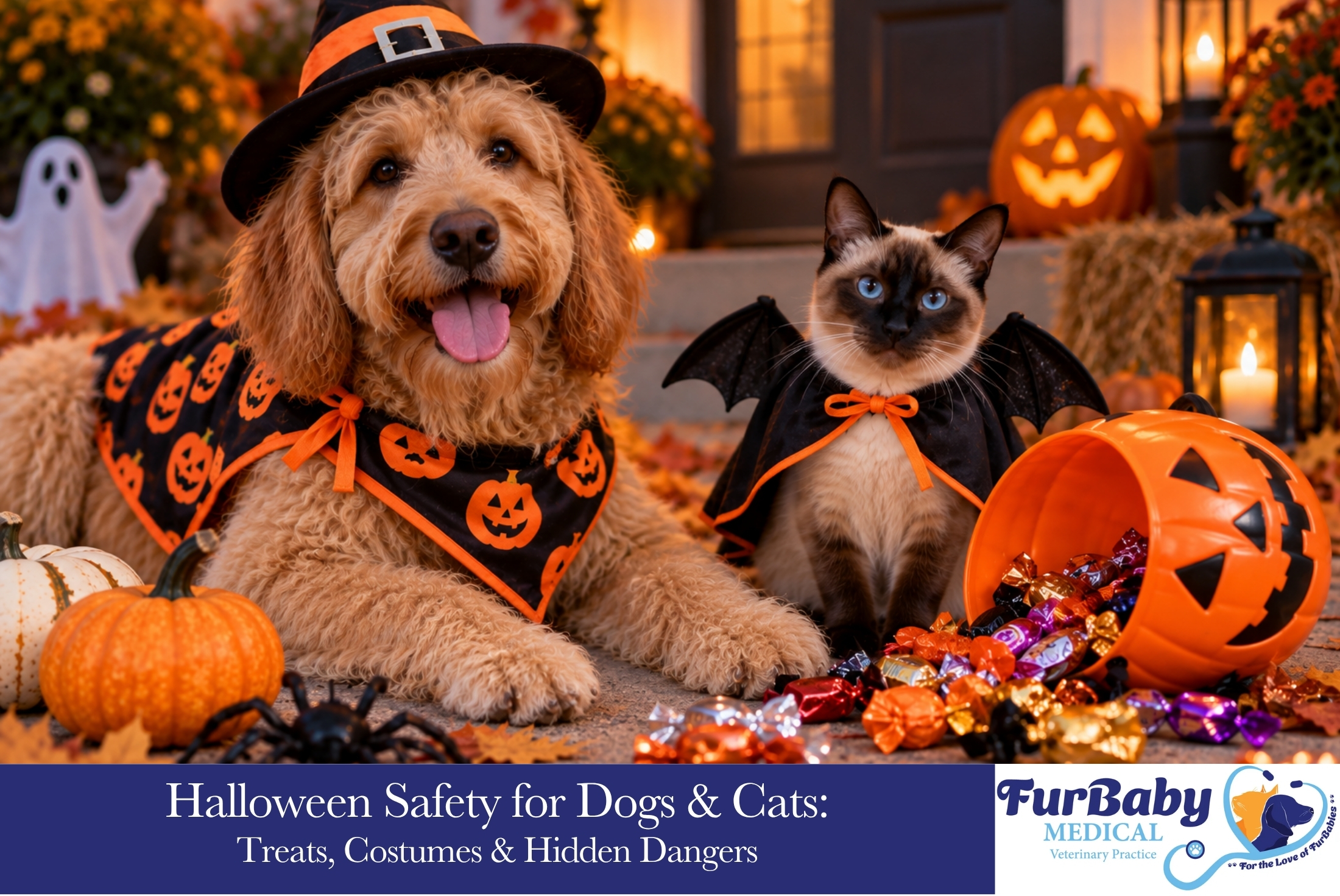
Halloween means costumes, candy, decorations, parties, and trick-or-treating. For our Furbabies, though, many of the things that make Halloween fun for us can create unexpected health and safety risks.
Candy within reach, unfamiliar visitors at the door, decorations, costumes, open doors, and discarded wrappers can all cause problems for dogs and cats. Some Halloween treats can even result in serious poisoning emergencies.
A little preparation can help keep your Furbaby safe while the rest of the family enjoys Halloween.
Keep the Candy Away From Your Furbaby
Chocolate
Chocolate is one of the best-known Halloween hazards for dogs.
Chocolate contains theobromine and caffeine, and the risk depends on the type and amount consumed and the dog’s body weight. Dark chocolate and unsweetened baking chocolate generally contain higher concentrations of theobromine.
Signs of chocolate toxicity can include:
- Vomiting or diarrhea
- Restlessness
- Increased thirst or urination
- Abnormal heart rhythms
- Tremors
- Seizures
If your pet eats chocolate, don’t wait for symptoms to develop. Contact a veterinarian and have the package available if possible. Knowing the type of chocolate, approximate amount consumed, your pet’s weight, and when it happened can help determine the risk.
Xylitol
Sugar-free doesn’t mean pet-safe.
Some sugar-free candy, gum, baked goods, mints, and other products contain xylitol, a sweetener that can be extremely dangerous to dogs.
Xylitol can cause a rapid decrease in blood sugar and potentially life-threatening complications. Signs can include vomiting, weakness, difficulty walking, collapse, shaking, and seizures.
Suspected xylitol ingestion is an emergency. Don’t wait for symptoms before seeking veterinary care.
Grapes, Raisins and Other Foods
Halloween treats can contain other ingredients that aren’t safe for pets, including:
Grapes and raisins • Macadamia nuts • Onions • Garlic • Caffeine • Alcohol
Homemade baked goods can be particularly difficult because you may not know everything your pet consumed.
When in doubt, contact your veterinarian.
Don’t Forget About Candy Wrappers
Sometimes the candy isn’t the only problem.
Dogs and cats may swallow foil, cellophane, plastic, sticks, and other packaging because they still smell like food. These materials can become choking hazards or potentially cause a gastrointestinal obstruction.
After trick-or-treating, keep both the candy and the wrappers somewhere your Furbaby can’t reach them.
What Should You Do If Your Pet Eats Something?
Don’t wait until your pet becomes sick.
Try to determine:
- What your pet ate
- Approximately how much
- When it happened
- Your pet’s approximate weight
- Whether any wrappers or packaging were swallowed
- Whether your pet is showing any symptoms
Keep the package or ingredient label if you have it.
Do not induce vomiting or give home remedies unless a veterinary professional specifically instructs you to do so.
Keep Costumes Comfortable
We love a Furbaby in a Halloween costume—but your pet needs to love it too.
A costume should never interfere with your pet’s ability to:
Walk • See • Hear • Breathe • Eat • Drink • Move comfortably
Watch for signs that your pet isn’t enjoying the experience, including freezing, hiding, excessive panting, trembling, trying to remove the costume, flattened ears, a tucked tail, or unusual agitation.
If your pet seems uncomfortable, take the costume off.
A festive bandana or Halloween-themed collar may be a much better choice for pets that don’t enjoy dressing up.
And never leave a costumed pet unattended.
Watch the Decorations
Candles and Jack-o’-Lanterns
A wagging tail can knock over a candle, and a curious cat can get close enough to singe its whiskers or fur.
Consider battery-operated candles when appropriate and keep open flames out of your pet’s reach.
Electrical Cords
Halloween lights and animated decorations often mean extra electrical cords.
Keep cords secured and inspect them regularly, particularly if you have a pet that likes to chew.
Small Decorations
Fake spiders, decorative bones, costume accessories, fake eyeballs, ribbons, and other small objects can look like toys to a pet.
If it’s small enough to swallow, keep it out of reach.
Glow Sticks
Glow sticks and glow jewelry can be especially tempting to cats.
Biting into one can expose a pet to extremely bitter liquid and cause significant drooling and distress. Keep them away from pets and discard damaged products promptly.
The Front Door May Be the Biggest Halloween Risk
On Halloween night, the front door may open dozens of times.
Even a pet that normally stays close to you can bolt after becoming frightened by a mask, loud noise, or group of excited children.
Consider setting up a quiet, secure room before trick-or-treating begins.
Include familiar things such as:
- Your pet’s bed or blanket
- Fresh water
- Favorite toys
- An appropriate chew or food puzzle for dogs
- A litter box and hiding place for cats
- Background music, television, or white noise if helpful
Most importantly, don’t force a frightened pet to interact with visitors.
Check Your Pet’s Identification Before Halloween
Even with careful planning, escapes happen.
Make sure your pet has current identification. If your Furbaby is microchipped, confirm that the registration contains your current phone number and contact information.
That’s something worth checking before Halloween night rather than after a pet goes missing.
Should Your Dog Go Trick-or-Treating?
It depends on the dog.
A confident dog that’s comfortable around crowds, children, costumes, darkness, and unfamiliar noises may enjoy being part of the evening.
A dog that’s fearful, reactive, noise-sensitive, or easily overstimulated will probably be happier at home.
If your dog does come along:
- Keep them securely leashed.
- Use reflective or illuminated walking equipment after dark.
- Keep them away from dropped candy and wrappers.
- Don’t allow them to approach unfamiliar people or animals without permission.
Halloween Safety for Cats
Halloween deserves some extra planning for cats.
Keep cats indoors. Increased pedestrian and vehicle traffic creates unnecessary risk.
Watch the front door. Cats can slip through surprisingly small openings while everyone is distracted by trick-or-treaters.
Provide a hiding place. A quiet room away from visitors can make the evening much less stressful.
Watch strings and decorations. Garlands, ribbons, fake cobwebs, and dangling decorations can encourage chewing or swallowing and potentially cause gastrointestinal problems.
Have an Anxious Furbaby? Plan Ahead.
If your pet has a history of significant fear, noise sensitivity, anxiety, or panic around visitors, talk to your veterinarian before Halloween.
Planning ahead provides time to discuss behavioral strategies and determine whether additional veterinary support is appropriate.
Never give your pet human medication, supplements, sedatives, or another animal’s medication without veterinary direction.
When Is It an Emergency?
Seek veterinary advice promptly if your pet has eaten:
- Chocolate
- Xylitol-containing products
- Grapes or raisins
- Human medications
- Potentially toxic decorations
- An unknown or questionable substance
Emergency evaluation may also be necessary for:
Difficulty breathing • Tremors • Seizures • Collapse • Marked weakness • Choking • Significant abdominal pain • Repeated vomiting • Sudden severe changes in behavior
A Special Note for Halloween Weekend 2026
Halloween falls on Saturday, October 31 this year.
Furbaby Medical will be open for Sunday Veterinary Urgent Care from 10:00 AM–4:00 PM on November 1 for illnesses and injuries that need prompt attention and are appropriate for outpatient urgent care.
If your Furbaby gets into something on Halloween night, don’t wait until Sunday if you suspect poisoning or your pet is experiencing a life-threatening emergency. Contact an appropriate emergency veterinary hospital or animal poison-control service immediately.
Furbaby Medical is not a 24-hour emergency hospital.
Your Halloween Pet-Safety Checklist
Before the costumes come out and the doorbell starts ringing:
- Keep candy and chocolate secured.
- Check sugar-free products for xylitol.
- Keep wrappers and Halloween trash inaccessible.
- Secure cords and decorations.
- Keep open flames away from pets.
- Remove small objects that could be swallowed.
- Keep glow sticks out of reach.
- Make sure costumes fit comfortably.
- Prepare a quiet room for anxious pets.
- Confirm ID tags and microchip information.
- Keep cats indoors.
- Keep dogs securely leashed outside.
- Know where to seek veterinary care before an emergency occurs.
Frequently Asked Questions
What should I do if my dog eats chocolate?
Contact a veterinarian promptly. Keep the chocolate package and determine the type, approximate amount eaten, your dog’s weight, and when the ingestion occurred.
What if my dog eats sugar-free candy?
Check the ingredients immediately for xylitol. If xylitol is present—or you can’t determine the ingredients—seek veterinary advice immediately.
Are Halloween costumes safe for pets?
They can be for pets that tolerate them comfortably. Costumes shouldn’t restrict movement, vision, breathing, or normal behavior. Remove the costume if your pet appears distressed.
Should my dog come trick-or-treating?
Only if your dog is genuinely comfortable with crowds, children, costumes, darkness, and unfamiliar noises. An anxious or reactive dog is generally safer at home.
Should cats stay inside on Halloween?
Yes. Keeping cats indoors reduces exposure to traffic, crowds, unfamiliar people, and open-door escape risks.
What if my pet swallows a candy wrapper?
Contact your veterinarian. Depending on the material, amount swallowed, and size of your pet, wrappers can potentially cause choking or gastrointestinal obstruction. Don’t induce vomiting unless instructed to do so.
Have a Happy—and Safe—Halloween!
Halloween should be memorable for costumes, treats, and family fun—not an unexpected trip to the veterinarian.
Keeping candy inaccessible, choosing costumes carefully, securing decorations, preventing escapes, and recognizing when your Furbaby is stressed can help everyone enjoy the holiday safely.
From Dr. Santiago and the Furbaby Medical team, we wish all of our Furbabies and their families a happy and safe Halloween! 🎃🐾
Contact Furbaby Medical
Furbaby Medical Veterinary Practice LLC
124 West St., Suite F
Ware, MA 01082
(864) 387-2229
Sunday: 10:00 AM–4:00 PM — Urgent Care
Monday: Closed
Tuesday: 9:00 AM–6:00 PM
Wednesday: 9:00 AM–6:00 PM
Thursday: Closed
Friday: 9:00 AM–6:00 PM
Saturday: 9:00 AM–3:00 PM


